
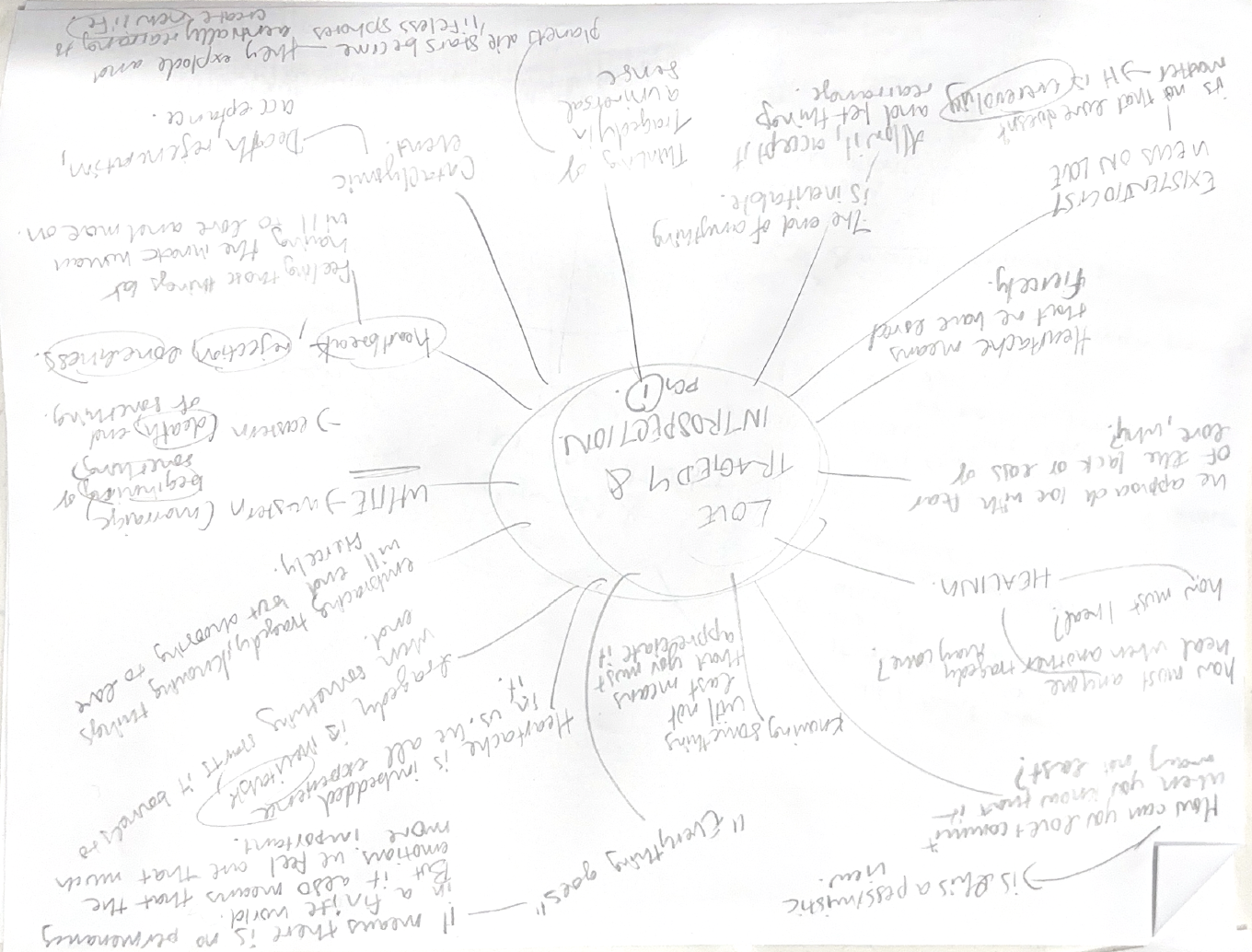
“How can we change tragedy into growth?” is what Trish Kapilan asked herself after experiencing a formidable heartbreak. Quickly and intrinsically, she turned to texts that tackled themes of love and inner reflection, such as existentialist literature and sacred Tamil couplets. As she began to find a sense of healing, these ideas gradually became the driving force behind the project that culminated her studies in Fashion at Toronto Metropolitan University (TMU). Entitled Love, Tragedy and Introspection, the collection takes further inspiration from traditional Tamil dance, the regenerative nature of both fish scales and hair, and the discernible rattle of chainmail to create five looks that evoke something ethereal yet distinctly of the earth.
The capstone collection made its debut at Mass Exodus in April 2025 and was most recently featured at Fashion Art Toronto (FAT) the following November. After what felt like divine luck allowed us to immerse ourselves in the FAT presentation, it was only natural we followed up with Trish to learn more. Below, she speaks openly about crafting each garment with intention, reframing heartbreak as a catalyst for personal growth, and more.
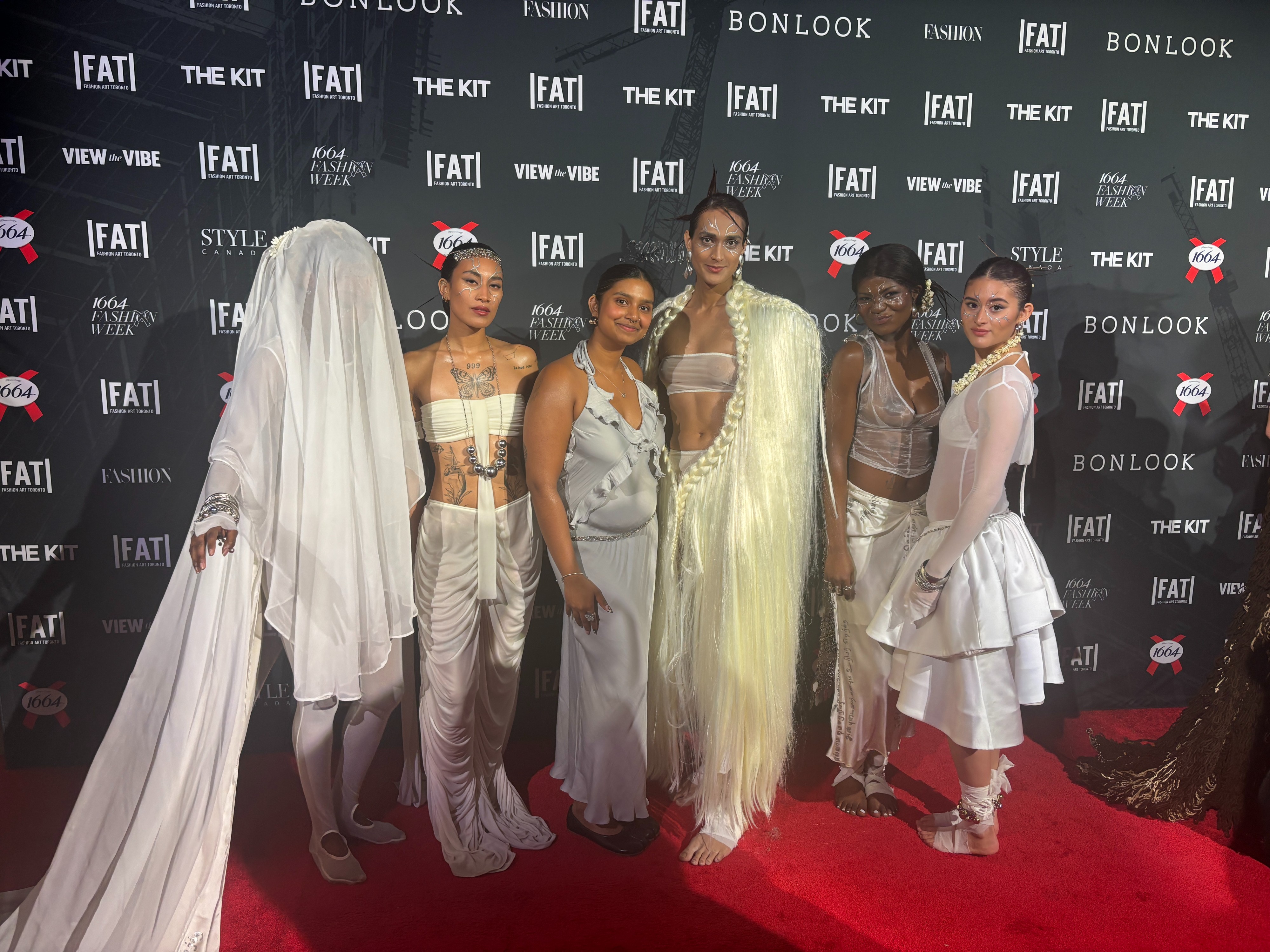
So before we get into the garments, I was wondering if you could speak to your experience at Fashion Art Toronto (FAT). Was it your first time?
Yeah. So I had actually been a spectator at Fashion Art Toronto beforehand, when I was in second-year [of fashion school]. So it was very new to me. But I actually had been looking into showing my collection.
How did the opportunity come about?
This opportunity actually came to me because of a fashion event planning course at TMU. A few students from different groups pitched my collection. I guess they liked it for the theme [Genesis Paradox]. I was really happy to help them out. So that's how that went about.
Did your previous work on Mass Exodus, or other early exposure of your work, help prepare you for FAT in any way?
I had a few pieces out at INTRO a while ago. But other than that, this was my first time having a collection show outside of academic purposes. Honestly, I think FAT was easier for me, because Mass Exodus is completely by yourself. You have to find your models by yourself, makeup, shoes, styling — everything you do by yourself.
.jpg)
Considering this was your first show outside of school, I can imagine that came with some pressure. What was the experience like for you?
I was very stressed out about how my collection would be perceived, because it’s public to everyone in Toronto and to people visiting as well. So I was very scared, and I definitely had a bit of imposter syndrome. But I think it went really well, and I feel like the Toronto creative community really supports us as designers, so it was just a great experience overall.
.jpg)
For the garments themselves, how did you choose your fabrics and materials — like the chainmail, hair, scalemail, and chrome — and decide what worked well together?
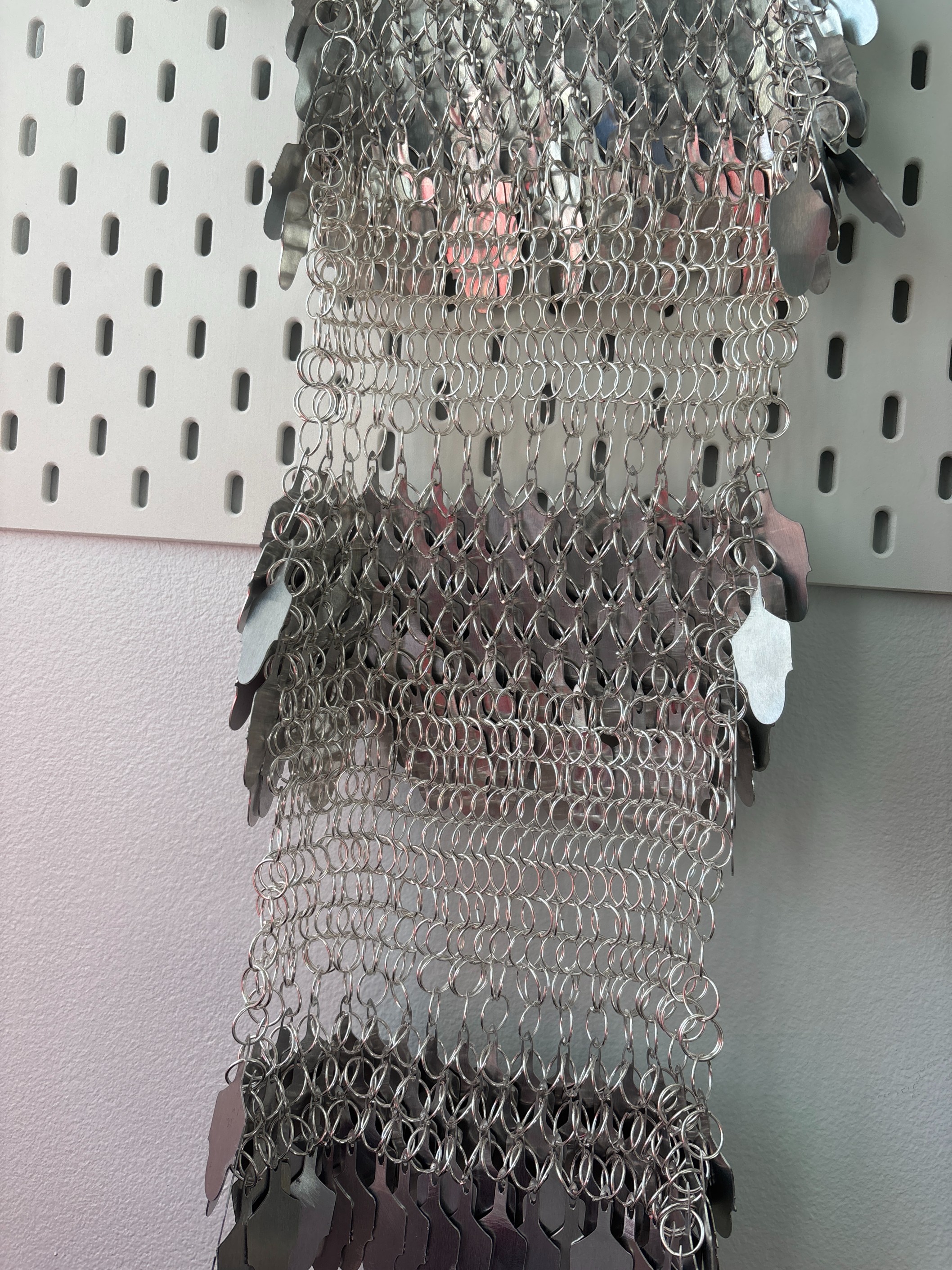
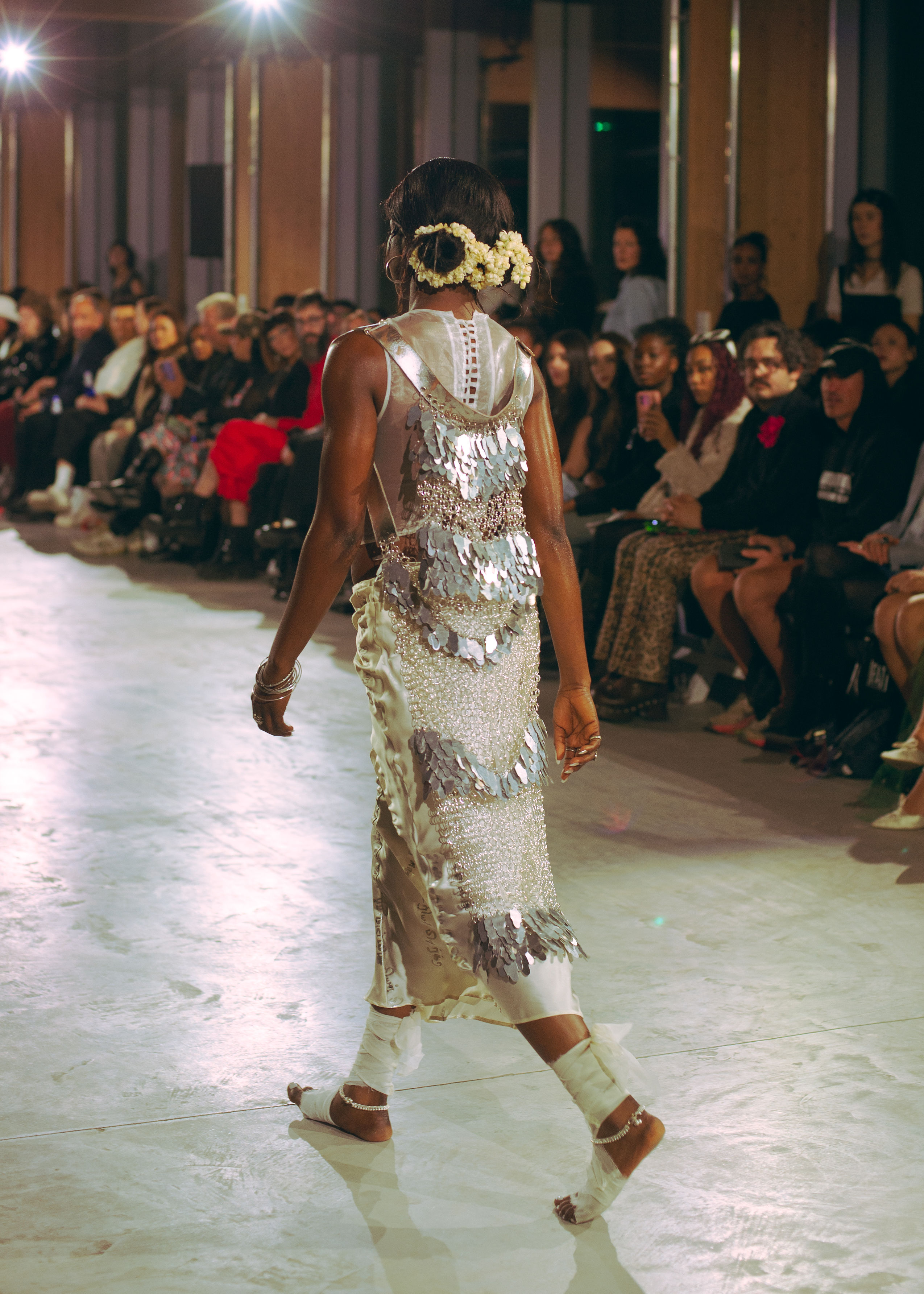
So when I first thought about my collection, it was about this healing process. I had gone through a pretty big breakup at the time, so I really tried to turn that experience around and thought, how can I be inspired by this? A lot of the time, we see white as something very pure. I had also been working at a bridal shop, so I was very inspired by white. I started thinking about how I could use a very blank canvas and let the textural and sensory materials put on the show, basically. That’s why I thought about chainmail — it’s something you can hear, and especially the scale mail. That was inspired by fish scales, because they’re regenerative; they grow back, and I wanted to reference that. Coupled with the hair, originally I wanted to use real hair, but I realized it might not be the most ethical option, and it’s very expensive as well. Hair also became a symbol of strength, growth, and regeneration. I think the materials really stand out because the collection is all white, with no colour except for silver, which allows the materials to become the focal point of the collection.

How do you go about working with material like that?
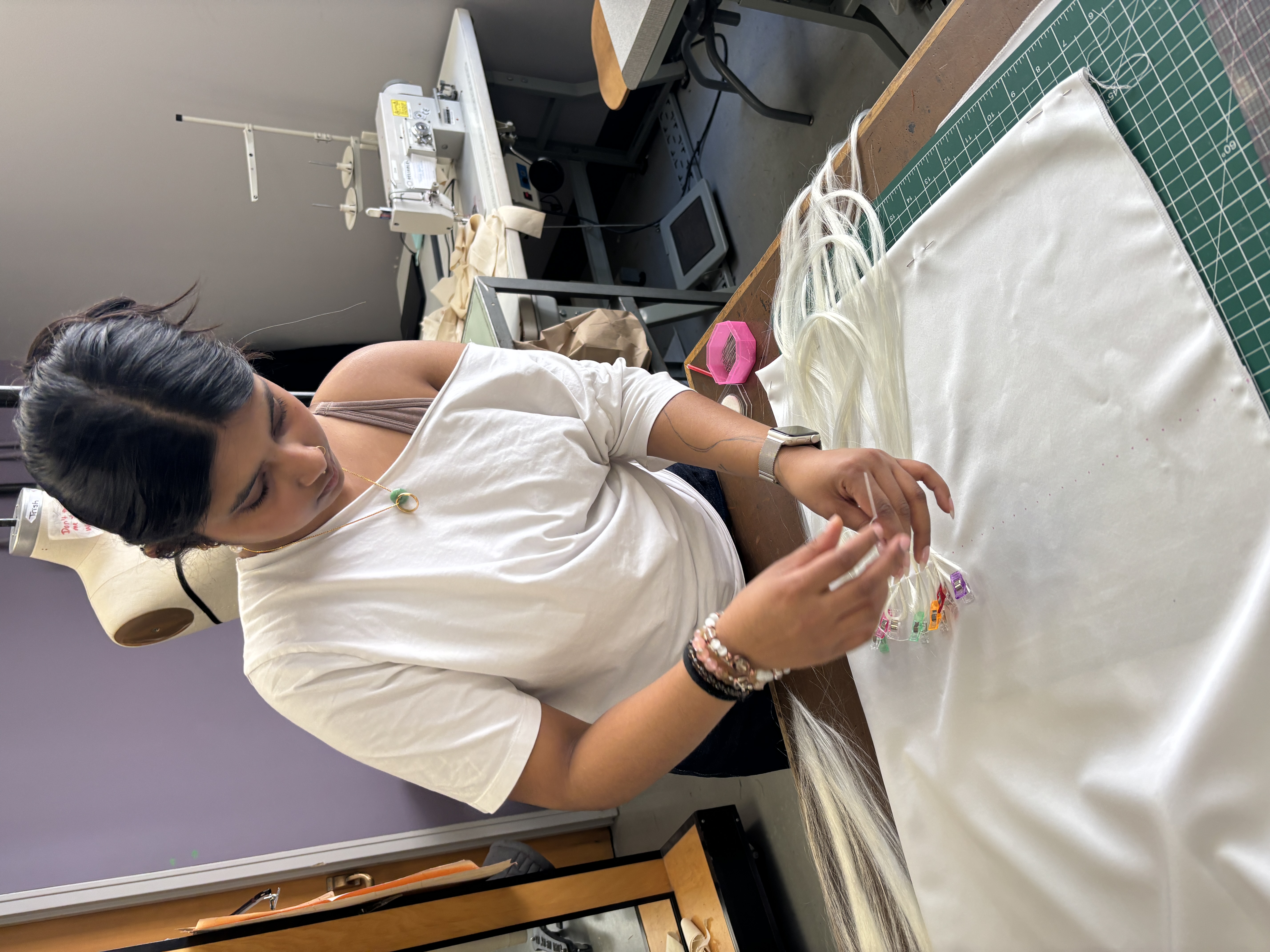
So all of the hair was actually braiding hair. I had a friend who does her own hair, and she helped me make it look like natural hair using hot water and different processes. Through her, I learned how to work with this hair, as well as braid it. And honestly, with the hand-sewing portion, a lot of people — like my professors — asked me why I didn’t just sew it onto mesh with a machine. But for me, it’s not very tedious, and there are a lot of things that can go wrong when you’re sewing with the machine.
And I think a lot of my collection has those hand-sewn elements because I wanted this practice to be a very healing thing. Those hours I spent sitting and hand-sewing everything felt like I was putting time and intention into the garment and doing it slowly. And even though it was tedious and a lot of work, it still helped me in that process.
And how long roughly did that process take?
I actually timed it, and it was around 70 hours.
Regarding the subject matter behind the looks, I particularly liked what you described as “tragedy not as finality.” I was wondering if you could speak to how that manifested in the tangible outcome of your designs?
As I spoke about before, it was a breakup that I was going through, and I felt very lost in my work. But honestly, I felt a moment in my school career that really sparked a momentum for me to learn and grow — and grow myself as a person through this collection as well. And that's why I named it Love, Tragedy and Introspection because I thought: how can we change tragedy into growth, you know? And that's why I had my collection in stages as well.
.jpg)
So the first look is like Reverie, it's the playfulness and innocence of falling in love. And the second look is Precipice, and it's about vulnerability and showing yourself to someone else. When the chainmail comes in, it introduces the sound of Fear creeping in, leading into Emersion, and then Eclosion as the final portion. I wanted it to be very visually striking because it represents the next stage — the eclipse of becoming someone new.
I like how, when you’re talking about 'Fear,' you use the word ‘sound,’ because the materials themselves make noise. How important were those sensory elements to the collection?
I think sound is so important because I think fashion has become so digital that you don't actually see, hear and feel the experience. I wanted something that only people who were spectators in the show could actually experience, which was the sound of the entire collection. I actually had a whole capstone playlist on Spotify too.
Any specific inspirations or references within media that you can point to?
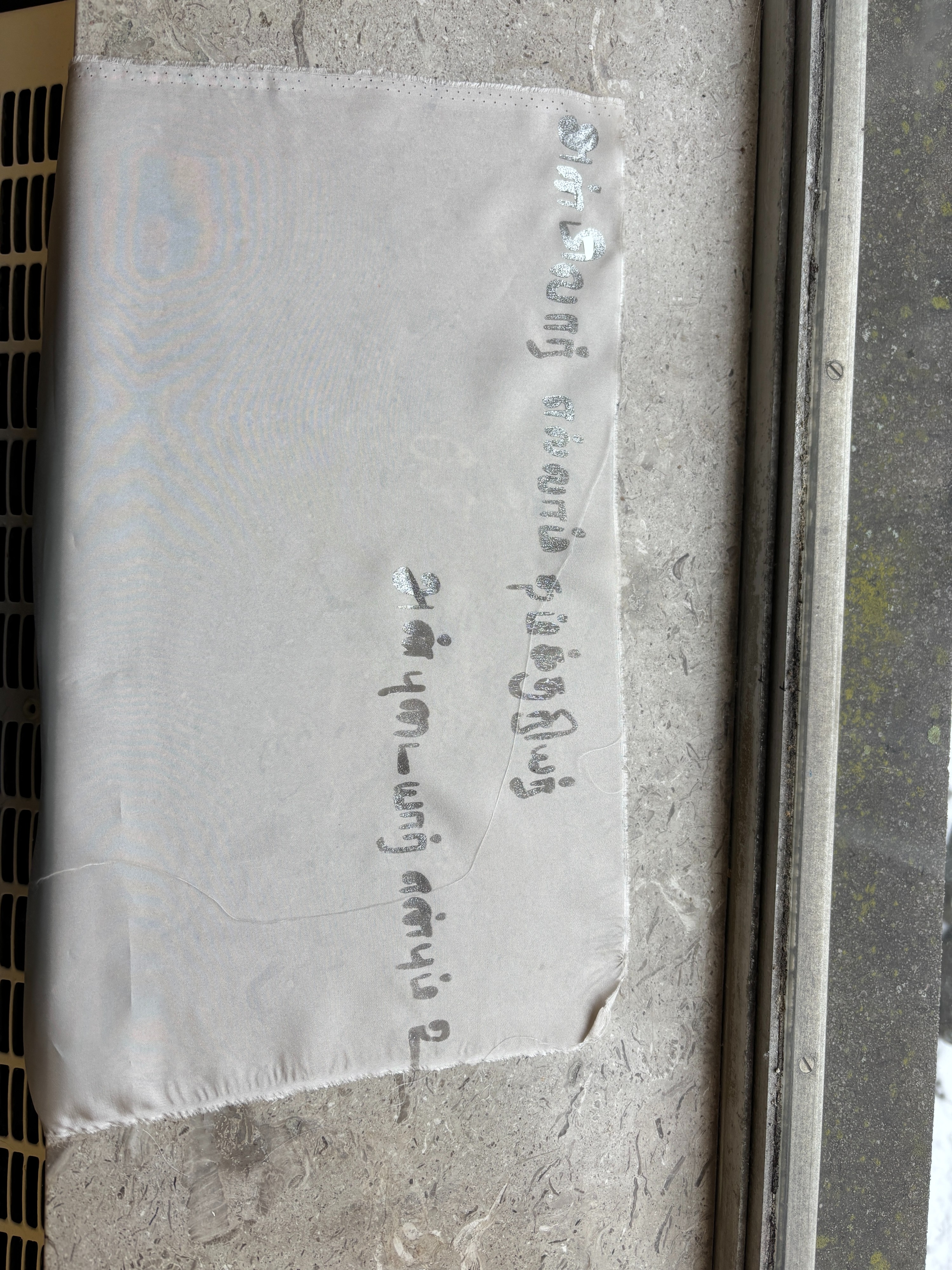
So a lot of the looks had script on them, and all of the foiling was actually about Thirukkural, which is a parable in Tamil. And I think it represents a huge lesson I learned while I was going through this capstone. It’s this specific parable, but I'll translate it: Those who are destitute of love appropriate all they have to themselves, but those who possess love consider even their bones to belong to others beautiful. (Couplet 72 in Chapter 8) So it was inspired by my culture, but I didn’t want to make cultural wear. I wanted it to be personal to me, and that’s why you see little fragments of me being Tamil in the collection. You see it in the hair styled with flowers like jasmine, the anklets on the feet, and the styling being very Tamil. But again, the collection is still very personal to me. It was also very inspired by Bharatanatyam, which is a traditional dance that I practice. So a lot of the silhouettes are very feminine and have to do with dance and movement.
Finally, what advice would you give a first-year fashion student?
I think the biggest piece of advice I can give a fashion student is not to be afraid to ask other people for help. A lot of the time — especially in my earlier years of fashion school — I felt like I had to do everything by myself, that I needed to learn everything on my own, and that I couldn’t ask anyone. But my collection is not just my own, it includes everyone who helped me — like my friend who soldered my chainmail together, and my partner who helped me buff all of my pieces in the garage with me during winter break. Just don't be afraid to ask for help, because people want to see you succeed.
Banner image (above) drawn by @vishnupremadas on Instagram.
This interview has been edited for length and clarity.